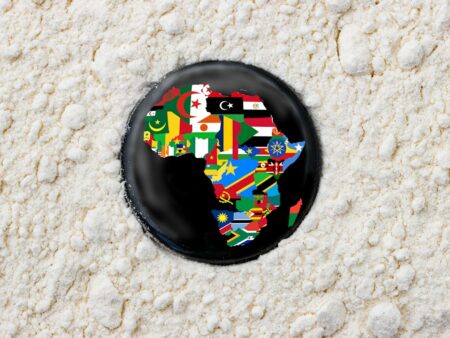

The digital revolution approaches West Africa because this region combines youthful population growth with fast technology adoption of new technologies. The online gambling industry known as iGaming shows rapid growth because of digital transformation in this sector. The path of iGaming Africa expansion needs thorough analysis from all stakeholders who want to understand its future development.
The West African market demonstrates its own distinct path in the iGaming industry because it actively creates its own unique story instead of following international market trends. The combination of rising internet usage and widespread smartphone adoption and sports-loving cultural heritage enables the market to experience an unprecedented growth period. The article delivers an expert analysis of West African iGaming market development through essential growth drivers and predicts how the betting industry will transform from 2025 into the future.
The Current Landscape: A Snapshot of West Africa’s iGaming Foundation
The evaluation of West African iGaming development requires knowledge about its current status. The economic powerhouses Nigeria and Ghana lead the way in African gambling while Côte d’Ivoire and Senegal demonstrate fast market growth which positions West Africa as a major force in African gaming. The sports betting industry maintains its position as the leading force in the market because football remains a universal favorite among bettors.
Sports betting platforms attract millions of West African users who participate daily because they want to experience the thrill of sports and win money. The social structure of West Africa supports this activity because people now access online betting services through modern digital platforms instead of physical locations. Mobile devices have enabled a rapid shift because they provide users with easy access to online services. Local operators who began with small operations developed successful market segments through their knowledge of customer preferences and payment systems. The strong initial interest in gambling shows that the market has great potential for expansion and diversification in the West African gambling industry.
Key Market Players and Player Demographics
The market features both international corporations and domestic companies that maintain strong positions in the industry. BetKing, SportyBet, and MSport have established themselves as major players in Nigeria and Ghana through their customized services for local sports and payment systems. People who play iGaming in West Africa usually belong to the young urban demographic which includes tech-savvy individuals who use their mobile phones for various digital activities including entertainment and financial dealings.
The identified demographic characteristics play an essential role in the market. The West African nations have populations with median ages under 20 which creates a massive potential customer base for iGaming services. People who grew up with digital technology show natural ability to accept new online betting websites without hesitation. The combination of affordable smartphones and affordable data plans makes digital betting accessible to more people who want to join the online betting space.
Ghana illustrates how deep this demographic pool runs. Youth make up an estimated 57% of the country’s population, a figure drawn from Ghana Statistical Services data cited by iGaming Business, and that age group has become the engine behind Ghana’s online gambling sector, which grew 24% in 2025 to reach $903.5 million in online gross win on H2 Gambling Capital figures. The same age pyramid repeats itself, with local variations, across Nigeria, Côte d’Ivoire and Senegal — which is why operators keep designing products around mobile-first, football-led betting rather than desktop platforms built for older, more established markets.
Driving Forces Behind the Anticipated Surge in iGaming
The expected substantial growth of iGaming in West Africa stems from multiple powerful elements which are reshaping digital and economic conditions throughout the region. The online gambling sector finds itself in an exceptionally advantageous position because of these market drivers.
Technological Advancements and Connectivity
The widespread adoption of smartphones stands as the leading factor which drives the most significant change. The device which used to be a status symbol has evolved into an essential tool that people use throughout their daily lives including in rural areas. The availability of affordable Android devices enables internet access to millions of people who no longer require expensive fixed-line infrastructure. The mobile-first design of iGaming platforms enables users to bet and play casino games and manage their accounts at any time from any location.
Continent-wide, GSMA’s Mobile Economy Africa 2026 report put mobile technologies’ contribution to Africa’s economy at $240 billion in 2025 — equivalent to 7.8% of GDP — while flagging that roughly 63% of Africans still live inside mobile network coverage without actually using mobile internet, mostly for affordability reasons rather than lack of signal. That gap is exactly where West African iGaming operators see room to grow: every new affordable handset or cheaper data bundle converts a covered-but-offline resident into a potential bettor, which is why device financing and data partnerships have become as central to operator strategy as odds or game selection.
Mobile Money and Payment Rails Removing Friction
Smartphone access only solves half the equation — moving money in and out of a betting account is the other half, and West Africa’s mobile money infrastructure has matured faster than its formal banking sector. Services built on this rail let a bettor in Lagos, Accra or Abidjan fund an account and cash out winnings without ever touching a bank branch, which matters in a region where mobile money adoption still outpaces traditional bank account ownership.
This is also where local operators retain an edge over international entrants: knowing which mobile money provider dominates a given city, and settling deposits in seconds rather than days, keeps players from abandoning a transaction halfway through. For a closer look at how licensing intersects with these payment flows in the region’s largest market, see our guide on Nigeria’s online casino legal framework.
Regulatory Clarity as a Growth Enabler
Growth projections mean little if the legal ground keeps shifting under operators and players. Ghana, Nigeria and Senegal have each moved in 2025–2026 toward clearer licensing regimes and published tax rules, which lowers the risk premium international operators attach to the region and gives local players a defined set of obligations instead of a legal grey zone. Our breakdown of Ghana’s 2026 betting tax framework covers how one of the region’s fastest-growing markets has handled that transition in practice.
What the Growth Curve Means for Bettors and Operators Through 2026
Put together, the data points to a market that is not just growing in volume but maturing in structure: real revenue growth tied to a specific, countable demographic rather than a vague “young population” claim, real connectivity data showing where the next wave of users will come from, and regulatory frameworks that increasingly resemble those in more established markets. For a West African bettor, that maturing means more locally licensed options and clearer tax rules on winnings. For operators, it means the easiest growth — acquiring users who are already online — is giving way to a harder, more capital-intensive phase: converting covered-but-offline populations into active, paying players.
The region’s trajectory through the rest of 2026 will likely be decided less by any single breakout country and more by how quickly mobile data costs fall and licensing regimes stabilize — the two levers that, on the data above, matter more than any single product feature an operator can ship.

Kwame Mensah is an experienced gambling analyst focused on the African betting industry. He shares insights on sports betting, casino platforms, market trends, and responsible gaming across multiple African countries.